


Film fans have been begging studios to greenlight big-budget, risky originals. And for the past couple of years, Warner Bros.- under the leadership of Mike DeLuca and Pam – have been living up to the promise. With Oscar-winning blockbusters like Ryan Coogler’s Sinners, Zack Cregger’s Weapons, and Paul Thomas Anderson’s One Battle After Another, the studio was on a winning streak last year. But 2026 has not been as kind, as Maggie Gyllenhaal’s The Bride and David Robert Mitchell’s The End of Oak Street proved to be ambitious misfires for the massively indebted production house.
The sour streak continues with Alejandro G. Iñárritu’s Digger. With a costly production budget between $160 and $180 million, Digger‘s scale is indisputable. The commercial logic is also sound: The Revenant grossed over $500 million worldwide, and Tom Cruise arguably stands in the same tier of stardom as Leonardo DiCaprio. Audiences have long asked Cruise to return to the heavily made-up comedic territory he explored in Tropic Thunder, and here he obliges.
Let us dispense with the obvious first: Digger is still the worst movie title of all time. It is, frankly, offensively egregious, and it reflects poorly on a film that deserves better. Entering the empty movie theater with an open mind, I found myself pleasantly surprised by Alejandro G. Iñárritu’s pointed satire. The Tom Cruise-starring flick fully understood the message it was attempting to deliver.
Craft and Scale

Emmanuel Lubezki’s cinematography is among the finest we have ever had. The color work and dynamic range are striking, particularly the singular bursts of color, such as Digger‘s red suit against stark white production design. These choices of extra expressionism, as the second half reveals, serve a purpose. Seen in IMAX, the film is gorgeously framed and shot, a worthy large-format experience, which makes its swift removal from IMAX screens in favor of a film four months into its run all the more puzzling.
My one filmmaking complaint concerns the sound design. The quirky sound effects linger were genuinely grating at times, especially the building tick and repeated shovel strikes introducing Digger’s family in the first act. I recognized this as part of the satirical tone, but in the booming surround sound of an IMAX theater, the technique quickly wore out its welcome.
Performances

Tom Cruise is phenomenal. However over-the-top and caricatured the role, he commits fully, and as the film later reveals, he is, in a sense, playing more than one part. His monologue before the European assembly is among my favorite sequences in the film, and his delivery of the line “that’s just the cost of business” left me on the floor. Riz Ahmed is a huge standout and arguably gives the second-best performance of the picture. Sandra Hüller, so often cast as slow-talking and sour, is witty and quick here, and it might be one of my favorites of hers despite her limited screen time. John Goodman is very funny, and deliberately excessive..
SPOILER ALERT: The Twist

The film’s pivotal plot twist reveals that we, the audience, are watching a rehearsal for a stage play called “Fossil Fools.” The characters and situations are all heightened caricatures in a comedic dramatization of “real events” in the movie’s fictional universe. For a first act, Digger presents as a straightforward satire in the vein of Don’t Look Up or Dr. Strangelove, executed well but perhaps slightly too broadly. The revelation that it’s an actual production brings a new layer of self-reflection and injects renewed energy into the second act.
This is territory I find irresistible. Two of my favorite films are Charlie Kaufman’s Being John Malkovich and Adaptation, movies about movies that function almost as companion pieces, along with Synecdoche, New York, which probes how real life bleeds into an actor’s performance. Digger belongs in that conversation. Some will call it pretentious. Iñárritu does pretentious right. Anyone familiar with the Oscar-winning director’s work, particularly his most recent introspective dramedy Bardo, will recognize the sensibility that Digger is going for.
Themes and the Ending
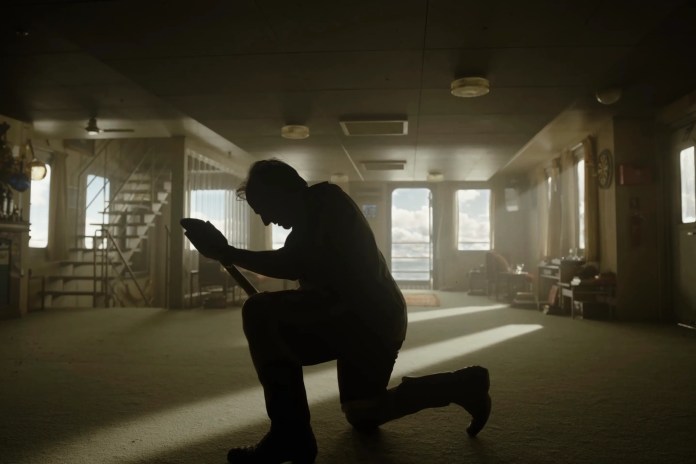
What distinguishes Digger is that it turns its lens on the satire genre itself. It is not simply a film about careless billionaires, but about what humanity does in response to catastrophe: create art. The brilliant closing sequence, in which the audience files out and fits gas masks, evokes our own COVID experience and the question of how future generations will dramatize it.
Jesse Plemons portrays Digger Rockwell’s nephew, who secretly funds the play out of familial guilt. In many ways, this parallels the real-world dynamic of wealthy figures purchasing their way into the arts to control narratives; this strikes me as especially pertinent. Digger’s own family funds the telling of the story, and the audience cheers as though something has been won. Then we put on our masks and return to the same world. We are easily appeased, and the film knows it. It is remarkably dense, and I look forward to rewatching it. The contrast with Primetime, which celebrates its own flashy exaggeration, is instructive: Digger indulges in flash, then steps back to ask what the audience actually takes away.
Reservations

My enthusiasm cooled slightly after a week of reflection. My principal reservation is that the film performs the satire of the satire so effectively that it nearly forgets the original satire. The play within the play, which I would have preferred to see titled Fossil Fools, a far stronger title than the one we received, builds toward an argument that we never fully witness. Having finally become invested in it, we cut away to the actors’ side, and I wished for two or three more scenes on the environmental front. The film’s attention shifts almost entirely to the arts until the final moments.
Verdict
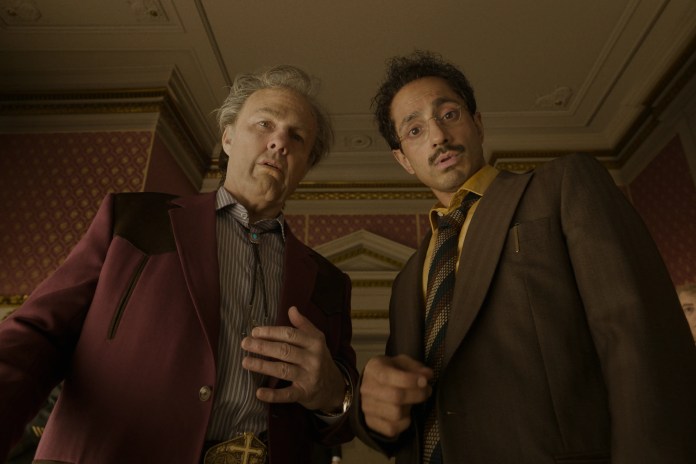
Digger is ambitious, dense, and unmistakably Alejandro G. Iñárritu. It is a layered, self-aware hybrid of genres with exceptional cinematography, career-best performances, and a genuinely compelling commentary on the artifice of satire in a dystopian world. Unfortunately, the film is tempered by an uneven thesis that occasionally gets lost in its own weaves. The film generously rewards its open-minded audience, so if you come in ready for the subversiveness, you’ll walk out pleased.
7.5/10